Hi, my name is Amandine-Dencia Beauvais. I am 18 years old, and I have been studying at College Ahuntsic for two years now. I am Natural Science. I have created this glossary to help students or people interested in the field of health. The glossary will help understand the meaning of 20 words related Biology. Each word will have a definition, an audio pronunciation to help people say to word correctly, an example of how we can use the word in a sentence and some may even have an image.
Allele
noun
A different forms of a gene.
Example: The combination of alleles determines an organism’s genotype.
fr: Allèle
Antibody
noun
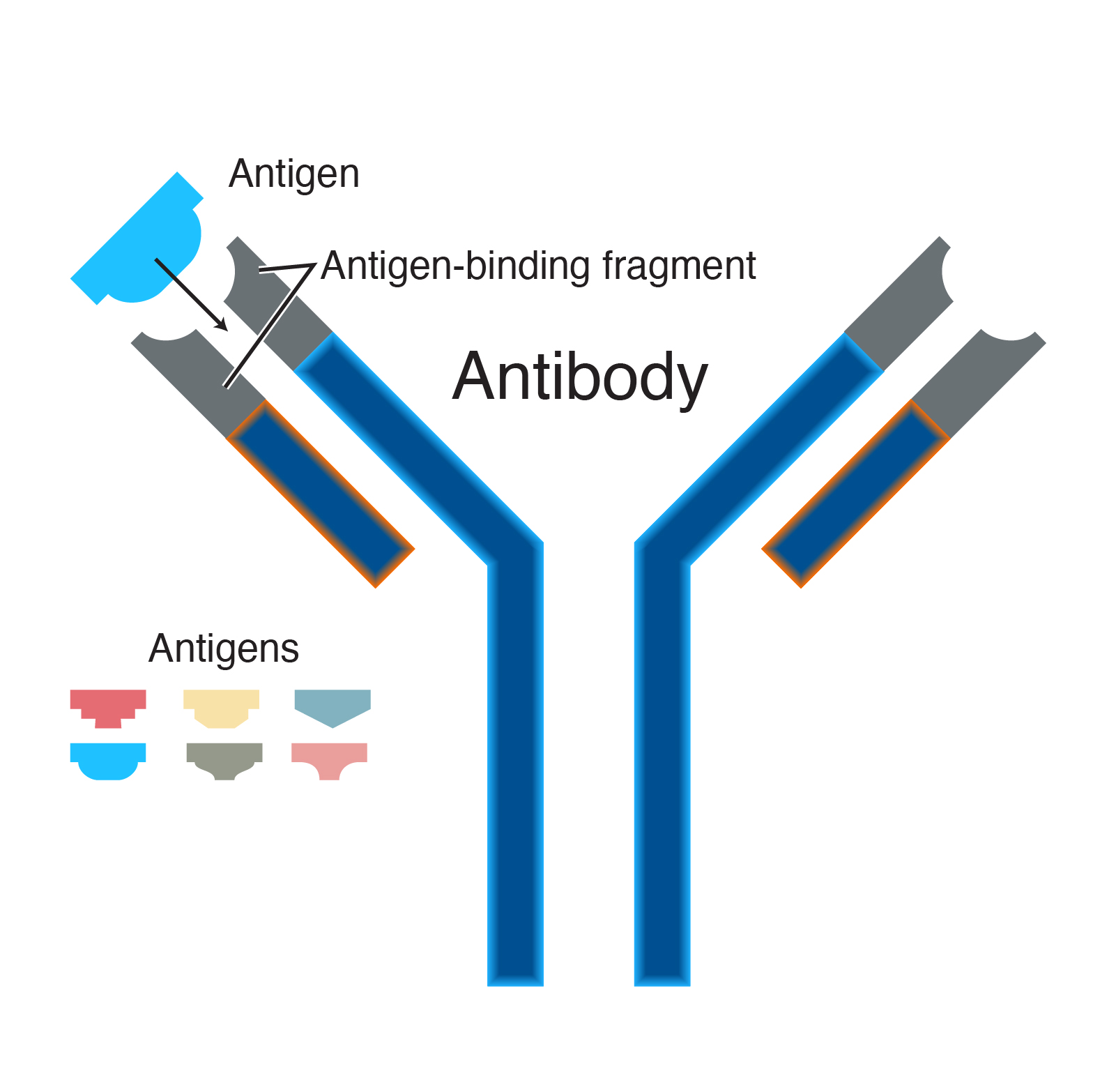
An antibody is a specialized defense protein synthesized by the vertebrate immune system.
Example: Antibodies help the body recognize and destroy viruses and bacteria.
fr: Anticorps
Antigen
noun
A substance triggering immune response.
Example: Blood group antigens (like A, B, or Rh) on the surface of red blood cells determine a person's blood type and are critical for safe blood transfusions.
fr: Antigène
Cell
noun
The smallest functional unit of life, capable of independent functioning. Plant cells have an outer cell wall, while animal cells do not.
Example: During mitosis, a single parent cell divides to create two identical daughter units.
fr: Cellule
Cellular respiration
noun
The process of producing ATP(energy).
Example: While plants perform photosynthesis, both plants and animals must undergo cellular respiration to power their biological functions.
fr: Respiration cellulaire
Diffusion
noun
The movement of molecules (like oxygen) across a membrane, sometimes referred to as osmosis when referring specifically to water.
Example: In biology, diffusion is the passive movement of molecules from an area of higher concentration to an area of lower concentration across a membrane.
fr: Diffusion
Genotype
noun
Genetic makeup of an organism.
Example: Scientists use the genotype to predict inheritance patterns.
fr: Génotype
Golgi apparatus
noun
A cytoplasmic organelle, part of the endomembrane system, that processes and packages macromolecules.
Example: The Golgi apparatus modifies and packages proteins for transport within the cell.
fr: Appareil de Golgi
Homeostasis
noun
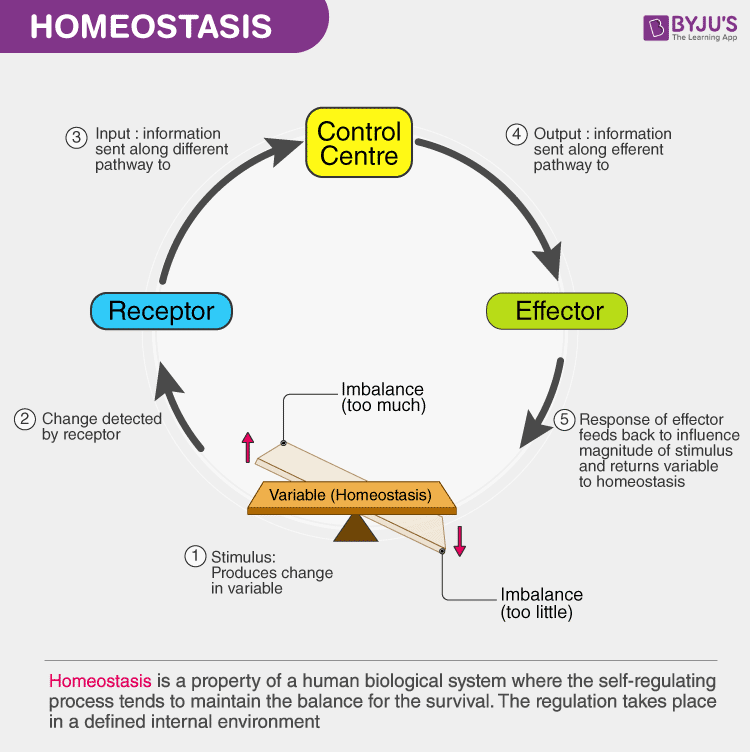
The tendency toward a relatively stable equilibrium between interdependent elements, especially as maintained by physiological processes.
Example: When you step out into a blizzard, your body works tirelessly to maintain homeostasis by shivering to keep your internal temperature stable.
fr: Homéostasie
Immunity
noun
The ability of an organism to resist infections, toxins, or foreign substances through the actions of the immune system.
Example: Strong immunity reduces the risk of illness.
fr: Immunité
Macromolecule
noun
Large, organic biological polymers essential for life, constructed from smaller subunits called monomers through dehydration synthesis.
Example: Macromolecules are built from smaller subunits called monomers.
fr: Macromolécules
Meiosis
noun
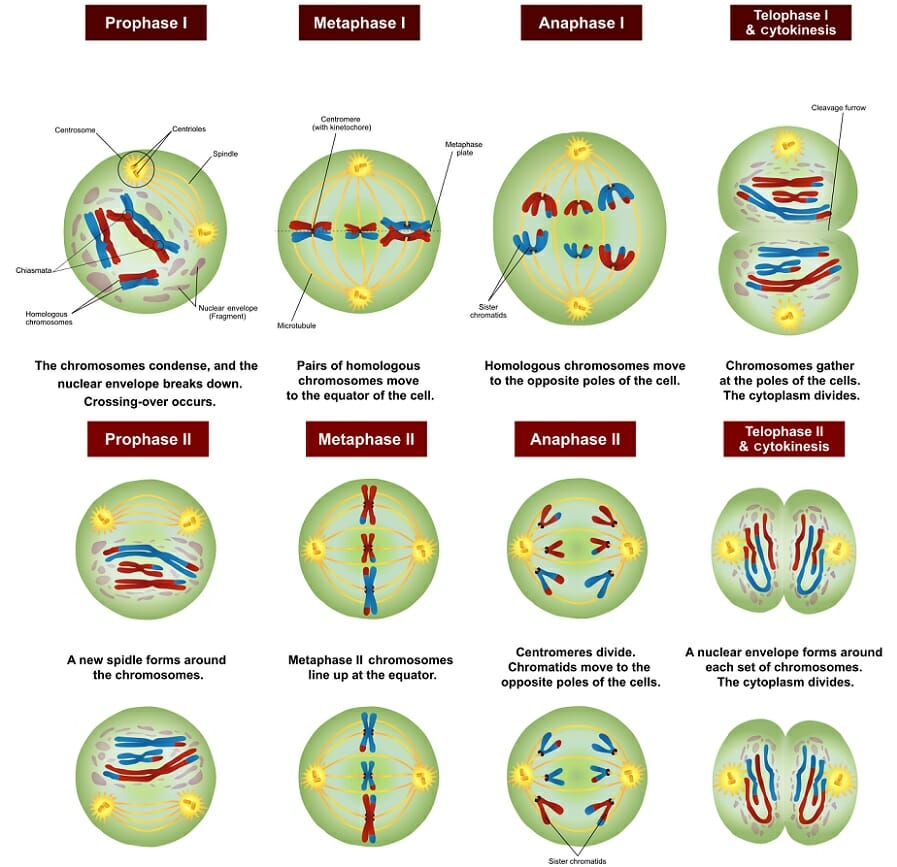
A type of cell division that results in four daughter cells each with half the number of chromosomes of the parent cell, as in the production of gametes and plant spores.
Example: Meiosis increases genetic variation in a population.
fr: Méiose
Metabolism
noun
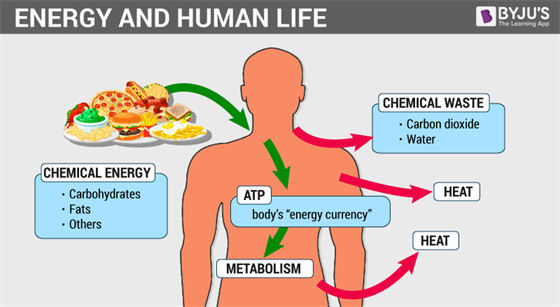
The chemical processes that occur within a living organism in order to maintain life.
Example: Regular exercise can boost your metabolism, helping your body convert food into energy more efficiently.
fr: Métabolisme
Mitosis
noun
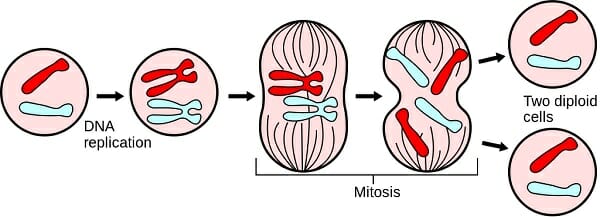
Mitosis is a fundamental process in eukaryotic cells where a single nucleus divides into two genetically identical nuclei, followed by cell division into two daughter cells. It is essential for growth, repair, and asexual reproduction, maintaining the same number of chromosomes as the parent cell.
Example: Mitosis allows organisms to grow by increasing the number of cells.
fr: Mitose
Mutation
noun
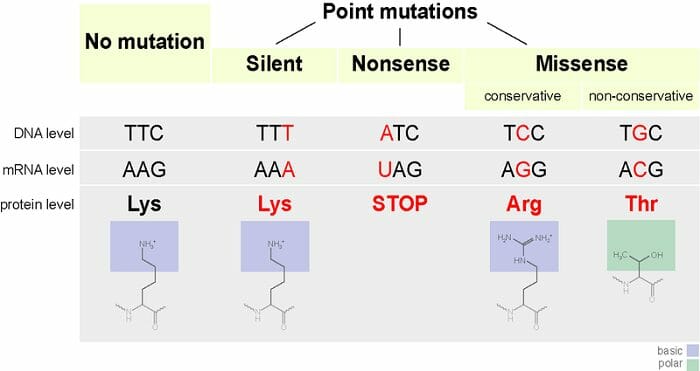
A permanent, heritable change in the nucleotide sequence of an organism's DNA or RNA genome, often resulting from replication errors or environmental damage.
Example: A mutation can be caused by errors during DNA replication.
fr: Mutation
Natural selection
noun
A fundamental mechanism of evolution where organisms better adapted to their environment tend to survive, reproduce more, and pass advantageous genetic traits to offspring.
Example: Natural selection plays a major role in evolution.
fr: Séléction naturelle
Osmosis
noun
Movement of water across a semi-permeable membrane.
Example: Without osmosis, cells could not maintain their shape.
fr: Osmose
Pathogen
noun
A disease-causing organism.
Example: While many microbes in our bodies are harmless or even helpful, only those that cause illness are classified as pathogens.
fr: Pathogène
Phenotype
noun
The physical expression of genes.
Example: Phenotype includes characteristics like height, hair color, and leaf shape.
fr: Phénotype
Photosynthesis
noun
The process where plants convert light into chemical energy.
Example: Without photosynthesis, there would be very little oxygen in the Earth's atmosphere for us to breathe.