Example: You own a patent on a machine, and that patent lasts 20 years. You spent $20,000 to design and create the machine (initial cost of the patent). You should record $1,000 each year as an amortization expense for the patent ($20,000 / 20 years).
en: amortissement
bankruptcy
noun
Bankruptcy is a legal proceeding initiated when a person or business is unable to repay outstanding debts or obligations.
Example: Lehman Brothers, a global financial services firm, filed for bankruptcy in 2008 with $639 billion in assets and $613 billion in liabilities. This bankruptcy is the largest in U.S. history and was a key event in the subprime mortgage crisis that led to the Great Recession.
en: faillite
benefit
noun
Profit gained from something.
Example: An apple cost us five bucks and we sell it at 10 bucks. We made 5 bucks of benefit
en: bénéfices
bookkeeping
noun
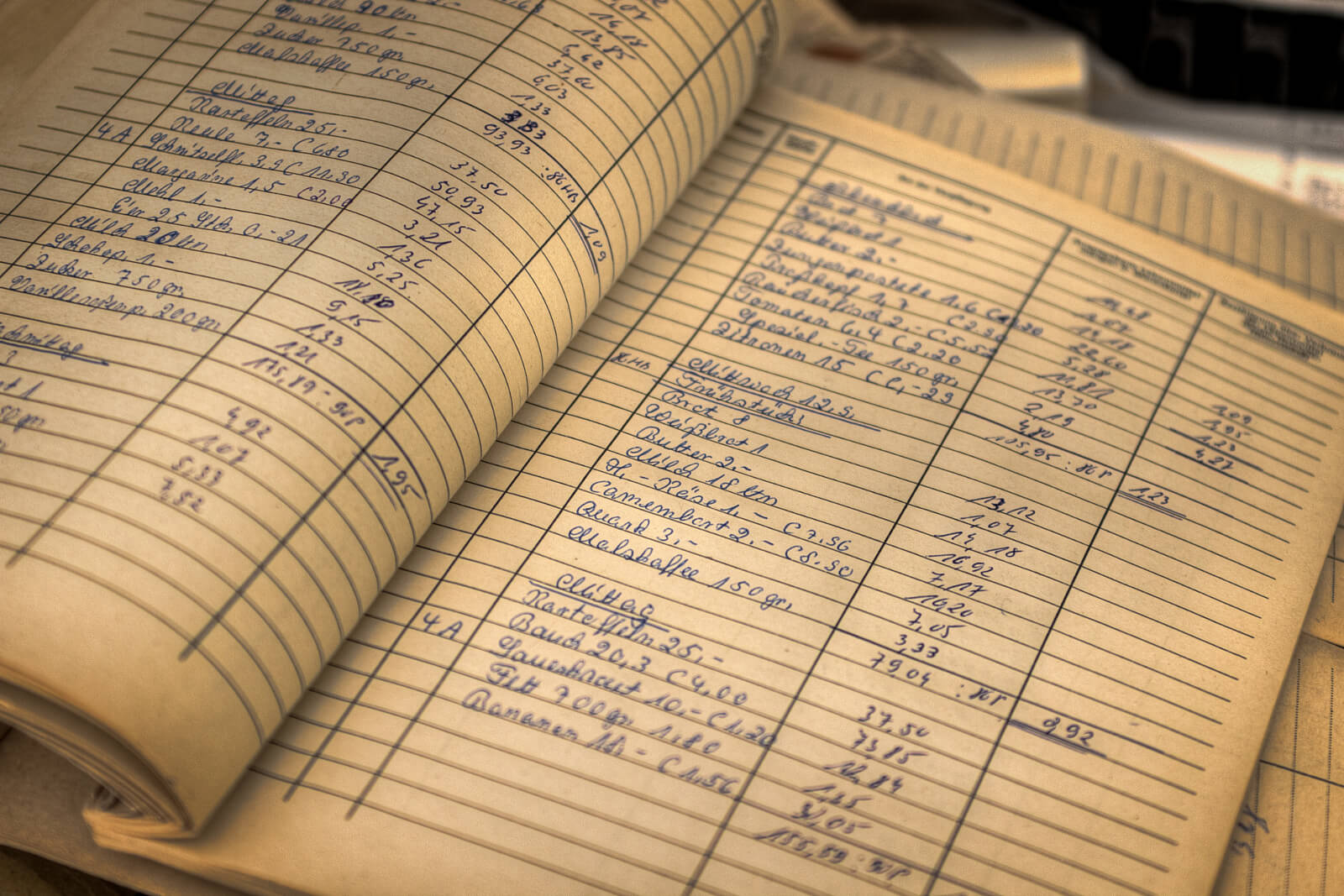
The activity or occupation of keeping records of the financial affairs of a business.
Example: I got in a financial muddle because I didn't keep my bookkeeping up to date.
en: tenue de livre compte
budget
noun
An estimate of income and expenditure for a set period of time.
Example: An annual or other regular estimate of national revenue and expenditure put forward by a finance minister.
en: budget
buisness
noun
Business is the practice of making one's living or making money by producing or buying and selling products (such as goods and services).
Example: A person that start selling apple in his store called applestore.
en: entreprise
corporation
noun
A large company or group of companies authorized to act as a single entity and recognized as such in law.
Example: McDonald is a corporation, it has many store owned by different people, but the big boss it's the director of McDonald.
en: société
cost
noun
An amount that has to be paid or spent to buy or obtain something.
Example: Buying a brand new car cost 50000$.
en: coût
goodwill
noun
An intangible asset that arises as a result of the acquisition of one company by another for a premium value.
Example: If the fair value of Company ABC's assets minus liabilities is $12 billion, and a company purchases Company ABC for $15 billion, the premium paid for the acquisition is $3 billion ($15 billion - $12 billion). This $3 billion will be included on the acquirer's balance sheet as goodwill.
en: bonne volonté
income statement
phrase
The Income Statement is one of a company’s core financial statements that shows their profit and loss over a period of time.
Example: The profit or loss is determined by taking all revenues and subtracting all expenses from both operating and non-operating activities.
en: relevé de revenue
intangible asset
noun
Reputation, name recognition, and intellectual property, such as knowledge and know how.
Example: Examples of intangible assets include computer software, licences, trademarks, patents, films, copyrights and import quotas.
en: actif incorporel
management
noun
The responsibility for and control of a company or organization.
Example: A successful career in management.
en: gestion
overdraft
noun
A loan arrangement under which a bank extends credit up to a maximum amount against which a current checking account customer can write checks or make withdrawals.
Example: Let's say Mary went to a retail outlet and purchased cosmetics amounting to $2,000 and wrote a check for the purchase. However, when the merchant deposited the check in the bank, Mary's account only contained $1,500, which means that she is $500 short of what is due for the check.
en: à découvert
pension
noun
A regular payment made during a person's retirement from an investment fund to which that person or their employer has contributed during their working life.
Example: A fixed amount, other than wages, paid at regular intervals to a person or to the person's surviving dependents in consideration of past services, age, merit, poverty, injury or loss sustained, etc.: a retirement pension.
en: pension
periodic inventory system
noun
A system where a business calculates its inventory by physically counting items at the of each accounting period rather than updating inventory continuously.
Example: An example of a business that might use a periodic inventory system is a furniture store. Furniture is a big-ticket item that is not purchased frequently. A furniture store might conduct physical counts of inventory once a month and report inventory levels at the end of each month.
en: système d'inventaire périodique
prime cost
noun
The direct cost of a commodity in terms of the materials and labor involved in tis production, excluding fixe costs.
Example: Let's say, as an example, a professional woodworker is hired to construct a dining room table for a customer. The prime costs for creating the table include direct labor and raw materials, such as lumber, hardware, and paint. The materials directly contributing to the table's production cost $200.
en: premier prix
real estate
noun
Property consisting of land or buildings.
Example: Real estate is property consisting of land and the buildings on it, along with its natural resources such as growing crops (e.g. timber), minerals or water, and wild animals; immovable property of this nature; an interest vested in this (also) an item of real property, (more generally) buildings or housing in general.
en: immobilier
running cost
noun
Money spent by accompany for the purpose of managing the business and/or for operating machinery for use in the buisness.
Example: Common operating costs in addition to COGS may include rent, equipment, inventory costs, marketing, payroll, insurance, and funds allocated for research and development. Operating costs can be found and analyzed by looking at a company's income statement.
en: coût de fonctionnement
share
noun
A unit of account for the capital or stock of a company.
Example: An individual unit of stock is known as a share. For example, if you were to say, "I own stock in Apple (AAPL 0.42%)," it tells us that you are invested in Apple stock and therefore own a small portion of the equity in the company.
en: action
tax
noun
A compulsory contribution to state revenue, levied by the government on workers' income and business profits, or added to the cost of some goods, services, and transactions.
Example: Higher taxes will dampen consumer spending.