15 My glossary is about my field of study witch is Diagnostic Imaging. There are many uncommon words in this field. Here is the place you can learn about it. terms
This project is made to get people learn on my field of study. It is also a way for me to improve the English language related to my field of study. My method to build this glossary is to give information and the definitions on many words that are common for me but not for the people who have never heard about Diagnostic Imaging. By reading this glossary you can learn more on this topic. During my many courses, like biology or physics, I learned many words the concept of them. It will be some of these words that will be defining in the glossary
angiography
noun
examination by X-ray of blood or lymph vessels, carried out after introduction of a radiopaque substance.
Example: Coronary angiography is considered to be the gold standard for the detection of reperfusion as it provides an accurate visualisation of the occluded IRA and predicts TIMI flow.
en: Angiographie
Anti-scatter grid
noun
Anti-scatter grid is a device for limiting the amount of radiation scatter created in a radiographic exposure reaching the detector.
Example: The technologist uses the anti-scatter grid to have the best x-ray.
en: Grille antidiffusante
Bone
noun
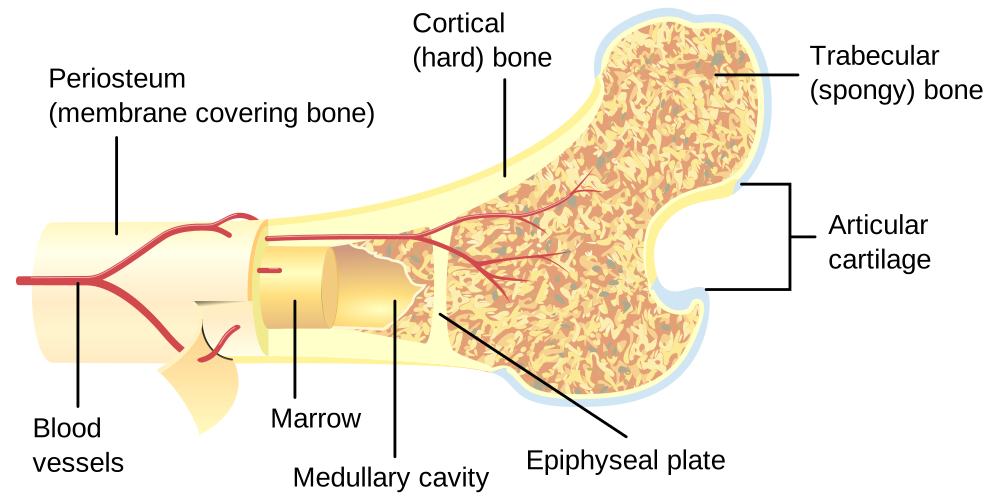
1. A bone is a rigid tissue that constitutes part of the vertebrate skeleton in animals.
2. Bones protect the various organs of the body, produce red and white blood cells, store minerals, provide structure and support for the body, and enable mobility
Example: These minerals are found in bone and are vital to maintain good bone health and reduce the risk of osteoporosis.
en: os
C-arm x-ray machine
noun
The name derives from the C-shaped arm used to connect the x-ray source and x-ray detector to one another. C-arms have radiographic capabilities, though they are used primarily for fluoroscopic intraoperative imaging during surgical, orthopedic and emergency care procedures.
Example: The technologist uses the c-arm x-ray machine to have images of the patient's body.
en: machine de rayon x de bras de c
Cartilage
noun
a strong and smooth substance made up of “chondrocytes,” or specialized cartilage cells, that produce a matrix of collagen, proteoglycans (a special type of protein) and other non-collagenous proteins. These materials help cartilage attract water and give it its shape and specific properties.
Example: Before Averil was born the cartilage in her long bones would have been transforming into bone from the centre of the shaft outwards, and after her birth the epiphyseal plates, (the secondary bone-forming centres), would have developed across the end of her long bones.
en: Cartilage
Computed tomography
noun
a form of tomography in which a computer controls the motion of the X-ray source and detectors, processes the data, and produces the image.
Example: Combining PET and CT (computed tomography using X-rays) been an important development.
A CT scan gives anatomical information to sub-millimetre resolution; it can therefore show the exact position, size and shape of a tumour, but not whether it is malignant or benign.
en: Tomodensitométrie
Coronal plane
noun
an imaginary plane dividing the body into dorsal and ventral parts.
Example: For example, MRI may show tumour spread beyond the bladder wall in the sagittal or coronal plane which cannot be seem on computed tomography.
en: Plan coronal
Fluoroscopy
noun
Fluoroscopy is a type of medical imaging that shows a continuous X-ray image on a monitor, much like an X-ray movie. During a fluoroscopy procedure, an X-ray beam is passed through the body. The image is transmitted to a monitor so the movement of a body part or of an instrument or contrast agent (“X-ray dye”) through the body can be seen in detail.
Example: Positioning was validated fluoroscopically in six subjects, with no adjustment of tube required, and fluoroscopy was therefore not considered essential in subsequent subjects.
en: Radioscopie
Lead apron
noun
An apron that contains lead or equivalent material and is sufficiently pliable to wear as protection from ionizing radiation. It is used to shield patients and personnel during radiological procedures.
Example: The technologist uses a lead apron to be protected from the radiation.
en: Tablier plombé
Mammography
noun
Mammography is an x-ray of the breast that uses low doses of radiation. The picture made during mammography is called a mammogram. It can help find both cancerous (malignant) and non-cancerous (benign) tumours in the breast.
Example: Instead the evidence from this group indicates that the incidence of breast cancer is significantly lower, the sensitivity of mammography is reduced and the risk of radiation-induced cancer is relatively high.
en: Mammographie
Pathology
noun
Pathology is the study of disease. It is the bridge between science and medicine. It underpins every aspect of patient care, from diagnostic testing and treatment advice to using cutting-edge genetic technologies and preventing disease. Doctors and scientists working in pathology are experts in illness and disease
Example: The industry benefits form the sophisticated research and publication program carried out by the Mauritius Sugar Industry Research Institute which maintains research divisions in plant breeding, botany and irrigation, pathology, entomology, soils and plant nutrition, cane and foodcrop agronomy, biometry and sugar technology.
en: Pathologie
Sagittal plane
noun
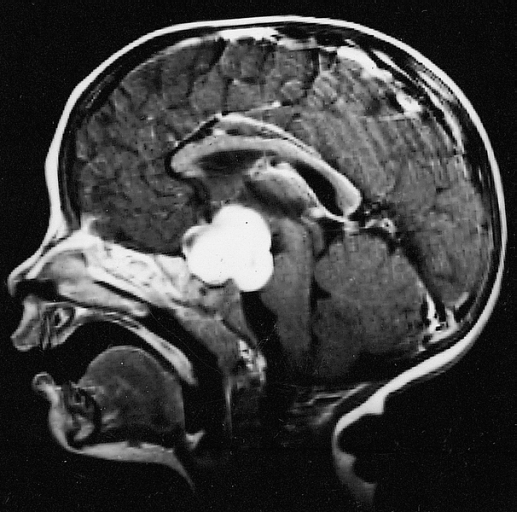
In anatomy, the sagittal plane, or longitudinal plane, is an anatomical plane which divides the body into right and left parts. The plane may be in the center of the body and split it into two halves (mid-sagittal) or away from the midline and split it into unequal parts (para-sagittal).
Example: The sagittal plane is the most helpful for imaging spinal pathology, supplemented by axial images of the area of abnormality or suspected pathology.
en: Plan sagittal
Ultrasound
noun
1. sound or other vibrations having an ultrasonic frequency, particularly as used in medical imaging. 2. an ultrasound scan, especially one of a pregnant woman to examine the fetus.
Example: Mary was unhappy with this so went back to her GP who prescribed analgesia and referred her for an outpatient ultrasound in 3 weeks.
en: Échographie
X-ray
noun
a photographic or digital image of the internal composition of something, especially a part of the body, produced by X-rays being passed through it and being absorbed to different degrees by different materials.
Example: Agreement of skin fold measurement and bioelectrical impedance analysis (BIA) methods with dual energy x\-ray absorptiometry (DEXA) in estimating total body fat in Anglo-Celtic Australians.
en: radiographie
X-ray tube
noun
a device for generating X-rays by accelerating electrons to high energies and causing them to strike a metal target from which the X-rays are emitted.
Example: You could compare an x-ray beam from a synchrotron with a laser and one from an x-ray tube with a floodlight.
Although they both might deliver the same number of photons per second, those from the synchrotron are concentrated on a smaller angle, whereas those from the x-ray tube are widely scattered.