This glossary is for anyone who wants learn about this fascinating program. My name is Emiliano, and it's my second semester studying this. I made this glossary thinking about all the new students who are going to be lost because of the new vocabulary just like I was when I entered this program. There's a ton of new words you're going to be introduced to but for this glossary I chose 20 of them that I think you will use very often and can be confusing. I looked for the correct pronunciation of the word, part of speech, definition, translation, an example and an image for some terms on the internet, so you could use and understand these terms correctly. Now you must learn each word and try to use it in school.
applet
noun
A very small application, especially a utility program performing one or a few simple functions.
Example: There's a useful control applet which can be used to center the picture.
fr: applet
application
noun
A program or piece of software designed and written to fulfill a particular purpose of the user.
Example: I need you to create an application that calculates the ray of this circle.
fr: application
array
noun
A series of memory locations – or 'boxes' – each of which holds a single item of data, but with each box sharing the same collective name.
Example: I need an array for the values that x can have.
fr: tableau
buffer
noun
A temporary memory area in which data is stored while it is being processed or transferred to speed up an operation.
Example: I am using a buffer, so we can finish earlier because pages are being formatted in the buffer while another is printing.
fr: mémoire tampon
daemon
noun
A type of computer program that runs in the background, performing various tasks without direct interaction from the user.
Example: The daemon has to be launched in the distant machine. When we start the daemon on the distant machine, we have to add the option '-d' which means 'daemon'.
fr: démon
data
noun
Information that can be interpreted and used by computers.
Example: I need you to assemble the data and send it to me.
fr: données
defragmentation
verb
The process of rearranging the data on a storage medium, such as a hard disk drive to make it work more efficiently.
Example: I need you to defragment your hard disk.
fr: défragmentation
domain name
noun
An easy-to-remember name that's associated with a physical IP address on the Internet.
Example: This kind of tricks uses a credible sounding, but fraudulent, domain name.
fr: identifiant de domaine internet
encryption
noun
The process of converting information or data into a code, especially to prevent unauthorized access.
Example: This is usually achieved through using some form of data encryption. Data encryption involves taking some type of data and in some way altering it so that only the intended recipient can work out what the original data was.
fr: chiffrement (encryption)
kernel
noun
The most basic level or core of an operating system of a computer, responsible for resource allocation, file management, and security.
Example: Certain calls create kernel objects such as processes or files, and these return what is known as a handle to the caller that is specific to that object, which allow operations to be used on the objects according to its permissions.
fr: noyau de système d'exploitation
motherboard
noun
The motherboard is a computer's central communication's backbone connectivity point, through which all components and external computer hardware connect.
Example: We should clean the mother board it is getting dirty.
fr: carte mère
open source
adjective
Denoting software for which the original source code is made freely available and may be redistributed and modified.
Example: Is the program a open source?
fr: logiciel open source
operating system
noun
The software that supports a computer's basic functions, such as scheduling tasks, executing applications, and controlling peripherals.
Example: There are many flaws present in operating systems that firewall cannot protect against. Typically, they run a "hardened" version of the Unix or NT operating system.
fr: système d'exploitation
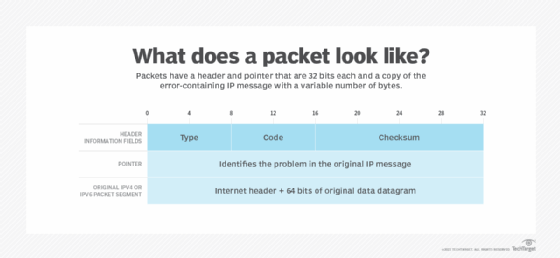
packet
noun
A block of data transmitted across a network.
Example: Did you get the packets I sent you?
fr: paquet/paquet informatique
protocol
noun
A set of rules governing the exchange or transmission of data between devices.
Example: At this point the node those transmitted places the original token back on the network and passes it onto the next node on the ring CSMA CD stands for Carrier Sensitive Multiple Access with Collision Detection, and it is a protocol that is apparent on all Ethernet Networks. As Ethernet Networks don't try and prevent collisions they deal with them using this protocol.
fr: protocole
query
verb
A request to retrieve or manipulate data stored within a database.
Example: All users input before allowing it to pass SQL query to Oracle database.
fr: language de requête (SQL)
render
verb
Process (an outline image) using color and shading in order to make it appear solid and three-dimensional.
Example: He is forced to render images by intermixing pixels of a few basic colors.
fr: rendu photoréaliste
router
noun
A device that forwards data packets to the appropriate parts of a computer network.
Example: You should go take a look at the router because the internet isn't working.
fr: routeur
script
noun
An automated series of instructions carried out in a specific order.
Example: I need you to create a script to grade my student's grades.
fr: script/language de script
server
noun
A computer or computer program which manages access to a centralized resource or service in a network.
Example: The software runs on a variety of Unix servers.

:max_bytes(150000):strip_icc()/71qNsDlUZL._SL1500_-db9624bf30494933b4d2279b89ea19ef.jpg)