This glossary is about the terms we use as a Diagnostic Imaging tech. I create it because it could help me in the future or even somebody else.
Artery
Noun
Any of the muscular-walled tubes forming part of the circulation system by which blood (mainly that which has been oxygenated) is conveyed from the heart to all parts of the body.
Example: The carotid ultrasound on showed that the right asymptomatic carotid ARTERY had a greater stenosis than the left symptomatic carotid ARTERY.
en: Artère
Diagnosis
Noun
The identification of the nature of an illness or other problem by examination of the symptoms.
Example: Therefore, DIAGNOSIS can be made at far earlier stages of HIV infection than previously achieved, which can improve survival times.
en: Diagnostic
Disease
Noun
A disorder of structure or function in a human, animal, or plant, especially one that has a known cause and a distinctive group of symptoms, signs, or anatomical changes.
Example: The afore mentioned problem with HIV AIDS causes serious labour shortages, not only those suffering from this DISEASE, but also family members whose time and valuable resources are spent on caring for their loved ones.
en: Maladie
Dosimeter
Noun
A device used to measure an absorbed dose of ionizing radiation.
Example: As a Diagnostic Imaging tech, I need my DOSIMETER.
en: Dosimètre
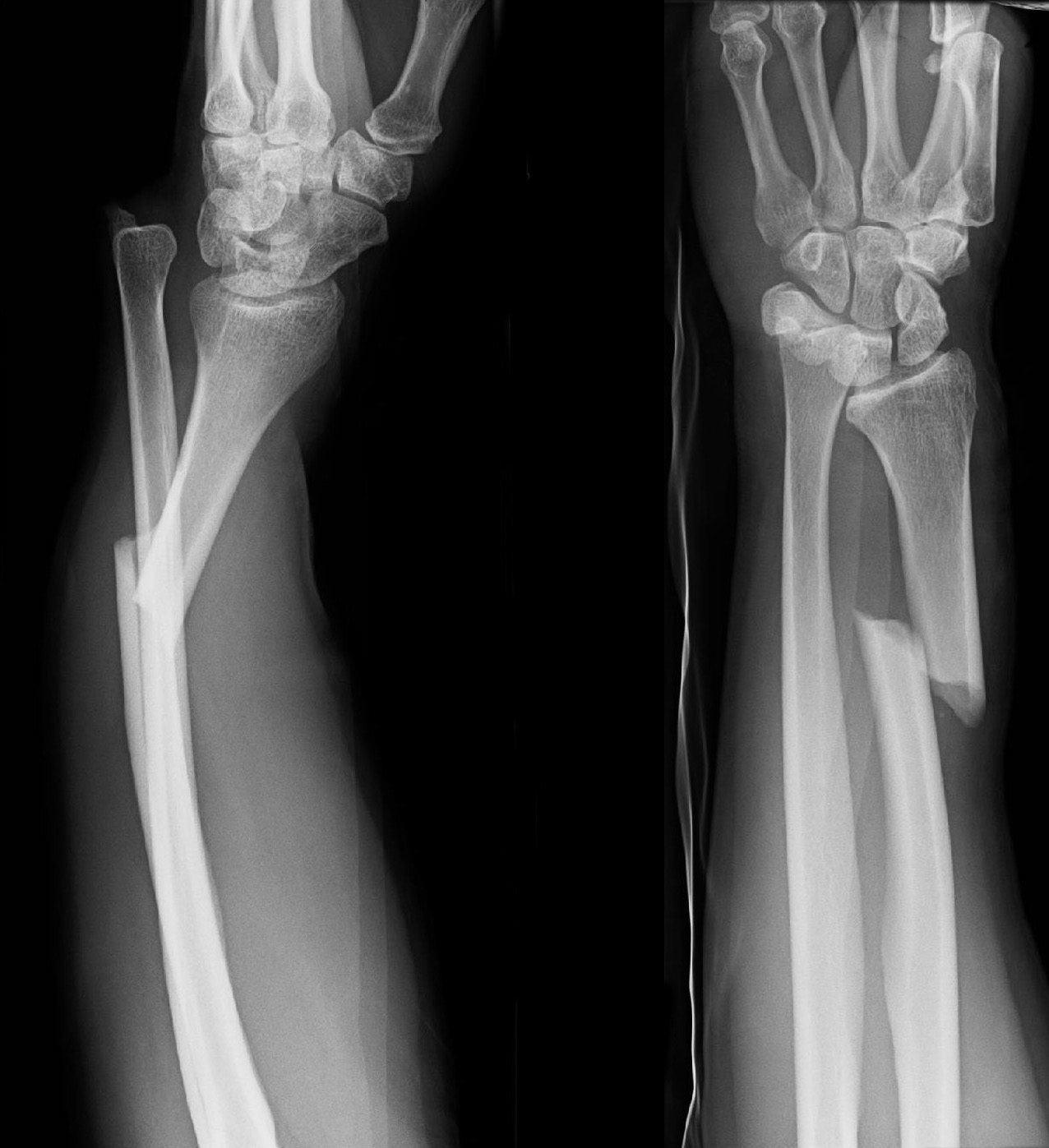
Fracture
Noun
The cracking or breaking of a hard object or material.
Example: Resulting in a decrease in bone cross-sectional area, reducing its ability to resist stresses and to resist FRACTURE.
en: Fracture
Laxative
Noun
A medicine which has a laxative effect.
Example: Lactulose (100mg PO) This is an osmotic LAXATIVE, which produces an osmotic diarrhoea and is useful in the treatment of hepatic encephalopathy.
en: Laxatif
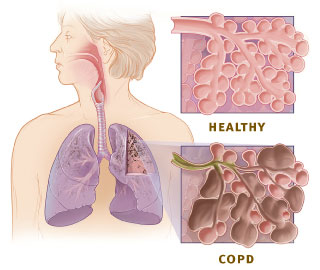
Lung
Noun
Each of the pair of organs situated within the rib cage, consisting of elastic sacs with branching passages into which air is drawn, so that oxygen can pass into the blood and carbon dioxide be removed.
Example: According to this essay, the Neanderthal prominent nose and large basal cavities are the combination of the low temperatures and humidity in order to avoid the chance of damaging the LUNG and brain.
en: Poumon
Needle
Noun
A thin pointer on a dial, compass, or other instrument.
Example: Ionisation occurs by passing the analyte solution through a fine NEEDLE with a high electrical potential. The potential is concentrated at the tip of the NEEDLE, causing the positively charged ions to accumulate there, creating a cone-like meniscus, called a "Taylor cone".
en: Aiguille
Nurse
Noun
A person trained to care for the sick or infirm, especially in a hospital.
Example: This is an illustration of an intervention which many people may not consider to be a NURSE's job and the important thing to understand is that the skill is not in the money management but in the formation and maintenance of the therapeutic relationship.
en: Infirmier
Pathology
Noun
A pathological condition.
Example: Assessment of PATHOLOGY: Dental PATHOLOGY: Serious caries was noted, mainly on the left side.
en: Pathologie
Prescription
Noun
An instruction written by a medical practitioner that authorizes a patient to be provided a medicine or treatment.
Example: PRESCRIPTION medical intervention 's PRESCRIPTION was not changed during his first admission.
en: Ordonnance
Pulse
Noun
A rhythmical throbbing of the arteries as blood are propelled through them, typically as felt in the wrists or neck.
Example: Lupins can be affected by many of the common PULSE diseases and pests, and for this reason should not be grown within four years of another break crop.
en: Impulsion
Radiation
Noun
The emission of energy as electromagnetic waves or as moving subatomic particles, especially high-energy particles which cause ionization.
Example: Incoming Solar RADIATION (Rn) When the other parameters under examination remained constant, the growth rate of the forest was seen to have a linear relationship with the amount of incoming solar RADIATION.
en: Radiation
Sedative
Noun
A drug taken for its calming or sleep-inducing effect.
Example: When combined with tri-cyclic anti-depressants, alcohol will give a SEDATIVE effect, and it can also make the effects of anaesthetic less effective.
en: Sédatif
Skeleton
Noun
An internal or external framework of bone, cartilage, or other rigid material supporting or containing the body of an animal or plant.
Example: The organisation of the cemetery does not show any sex or age divisions, apart from the south transept, where only males were found (and two SKELETONs of indeterinate sex).
en: Squelette
Skull
Noun
A framework of bone or cartilage enclosing the brain of a vertebrate; the skeleton of a person's or animal's head.
Example: Some genetic conditions can result in cranial deformity and chromosome disorders incorporate many symptoms and or deformities occasionally including modification of the SKULL, for example Trisomy 13 and Down's syndromes.
en: Crâne
Spleen
Noun
An abdominal organ involved in the production and removal of blood cells in most vertebrates and forming part of the immune system.
Example: On examination, such patients may have enlarged, non-tender lymph nodes, an enlarged live and or SPLEEN.
en: Rate
Tumor
Noun
A swelling of a part of the body, generally without inflammation, caused by an abnormal growth of tissue, whether benign or malignant.
Example: It is this metastasis of the cancer to sensitive areas, such as the lymph nodes, that makes breast cancer lethal, as a TUMOR in the breast is not lethal in itself.
en: Tumeur
Vein
Noun
Any of the tubes forming part of the blood circulation system of the body, carrying in most cases oxygen-depleted blood toward the heart.
Example: Once in the VEIN vessel the angle of the needle should be flattened to make sure it does not go straight through the other side.With infusion, needles can become dislodged and damage the VEIN. Also they can move inside the VEIN.
en: Veine
X-ray
Noun
A photographic or digital image of the internal composition of something, especially a part of the body, produced by X-rays being passed through it and being absorbed to different degrees by different materials.
Example: The structure and mechanisms put forward that are discussed in this essay are all supported by various experiments involving a range of different techniques, such as genetic study, nuclear magnetic resonance analysis, X-RAY analysis, electron microscopy, video fluorescence microscopy, studies of mutants and chemical cross linking among others.