Hello everyone, my name is Mathilde Marier, and I am currently studying in Cegep Montmorency in Social Science. In Quebec, we have an institution called Cegep which is between secondary and university. Cegep is supposed to help students find their field of study for the future. As for myself, Cegep has helped me make my choice to go to university in Psychology. To help me reach my goal, I will use this glossary to familiarize myself with all the vocabulary related to my field of study.
Analysis
Noun
a detailed examination of anything complex in order to understand its nature or to determine its essential features : a thorough study
Example: It does introduce further complexity to his previous internal, 'typical' problem-oriented analysis.
en: Analyse
Anxiety
noun
A feeling of worry, nervousness, or unease, typically about an imminent event or something with an uncertain outcome.
Example: In light of our current understanding of anxiety disorders, evaluate Freud's interpretation and handling of the Wolf-Man case.
en: Anxiété
Attitude
noun
A feeling or opinion about something or someone, or a way of behaving.
Example: George Williamson comments on the "paradox of the seasons" which "inverts the attitude towards the life-cycle...giving an ironic turn" to the text.
en: Attitude
Classification
noun
The action or process of classifying something according to shared qualities or characteristics.
Example: This system of classification groups mental disorders via their symptom presentation and sees this as an important part of interpreting the symptoms of the patient in order to procure the correct treatment.
en: Classification
Cognition
noun
Its the mental action or process of acquiring knowledge and understanding through thought, experience, and the senses.
Example: He may be struggling with appropriate levels of cognition for his developmental age, his social skills are developing well which should help enormously with his ability to learn.
en: Cognition
Emotion
noun
A natural instinctive state of mind deriving from one's circumstances, mood, or relationships with others.
Example: Her action and emotion are so closely linked to each other that her passion tends to lead to her to act an instinct alone, which is certainly unusual but not purely incomprehensible.
en: Émotion
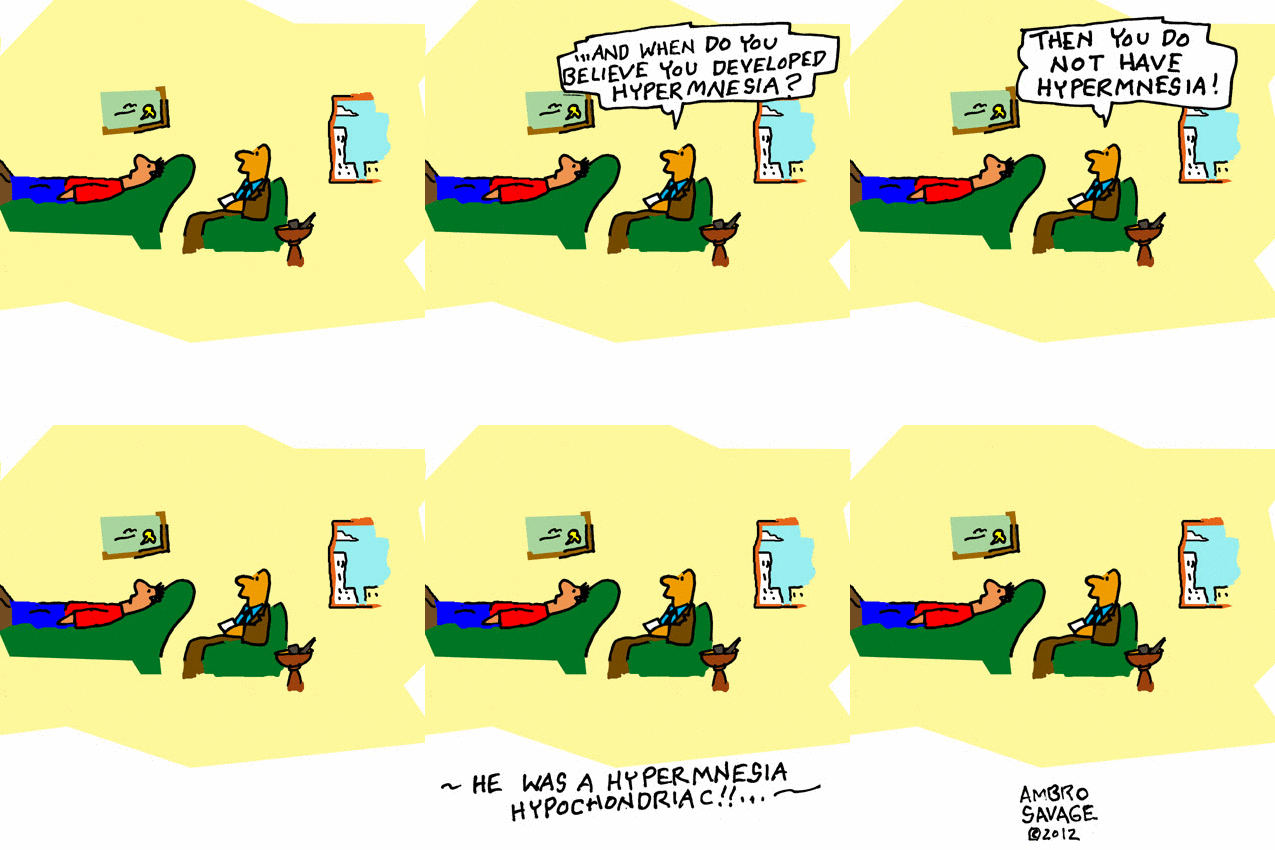
Hypermnesia
noun
Unusual power or enhancement of memory, typically under abnormal conditions such as trauma, hypnosis, or narcosis.
Example: Evaluating hypnotic memory enhancement (hypermnesia and reminiscence) using multitrial forced recall.
en: Hypermnésie
Illness
noun
A disease or period of sickness affecting the body or mind.
Example: As when he was a small boy he carried out compulsive religious rituals and as a man he suffered from obsessions concerning illness, his appearance and sexual urges.
en: Maladie
Personality
noun
The combination of characteristics or qualities that form an individual's distinctive character.
Example: Certain personality traits are particularly vulnerable to coercion.
en: Personnalité
Persuasion
noun
The action or fact of persuading someone or of being persuaded to do or believe something.
Example: In this particular case it is the idea of persuasion within the media that is being investigated.
en: Persuasion
Phobia
Noun
An extreme or irrational fear of or aversion to something.
Example: Until then she had never been seen by a Doctor, due to a phobia of healthcare professionals, following a traumatising event during her childhood at the time of her mother's illness and death.
en: Phobie
Placebo effect
Noun
A beneficial effect, produced by a placebo drug or treatment, that cannot be attributed to the properties of the placebo itself, and must therefore be due to the patient's belief in that treatment.
Example: For drug companies, the placebo effect can pose an obstacle to profits if their medications fail to outperform placebos in clinical trials, they won't get approved by the FDA.
en: Effet placebo
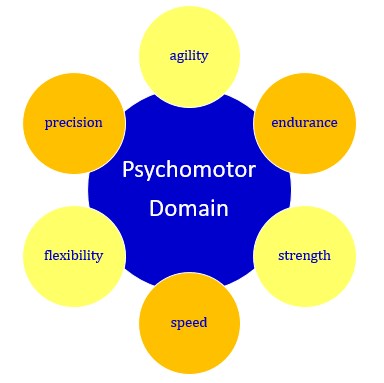
Psychomotor
Adjective
Relating to the origination of movement in conscious mental activity.
Example: A decrease in short-term memory and psychomotor skills is a common facet of normal ageing.
en: Psychomoteur
Reinforcement
Noun
The process of encouraging or establishing a belief or pattern of behavior, especially by encouragement or reward.
Example: Skinner always recommended positive reinforcement such as rewards over negative reinforcement or punishment.
en: Renforcement
Resilience
Noun
The capacity to recover quickly from difficulties; toughness.
Example: Their resilience to hardship is a key feature of this section of the text and it is then followed by an emphasis on the rewards they received for their piety to God.
en: Résilience
Schizophrenia
Noun
A long-term mental disorder of a type involving a breakdown in the relation between thought, emotion, and behavior, leading to faulty perception, inappropriate actions and feelings, withdrawal from reality and personal relationships into fantasy and delusion, and a sense of mental fragmentation.
Example: It has been shown that unpopular children are more likely to have psychological difficulties such as schizophrenia, anxiety disorders, mood disorders and criminal behaviour.
en: Schizophrénie
Self-actualization
Noun
The realization or fulfillment of one's talents and potentialities, especially considered as a drive or need present in everyone.
Example: Since "motivators reflected people's need for self-actualization, while hygienes represented the need to avoid paid" (Fincham & Rhodes 2005: 199), both factors stem from completely separated origins.
en: Réalisation de soi
Sensorimotor stage
Noun
The sensorimotor period refers to the earliest stage (birth to 2 years) in Jean Piaget's theory of cognitive development. This stage is characterized as the period of a child's life when learning occurs through a child's sensory and motor interactions with the physical environment.
Example: With mentally retarded infants, the treatment emphasis is on sensorimotor development, which can be stimulated by exercises and special types of play.
en: Stade sensorimoteur
Social influence
Noun
The exercise of social power by a person or group to change the attitudes or behavior of others in a particular direction.
Example: In addition there are the other social influence to consider linguistic identities between genders.
en: Influence sociale
Social norm
Noun
Social norms are socially accepted rules of behaviour and conduct which are prescribed by society and expected of an individual by that society. They are based on traditions, beliefs and values of a society, and they may change from one society to another.
Example: Conformity refers to "cases in which individuals change their attitudes, verbal statements or behaviours to adhere more closely to some salient social norm".
en: Norme sociale
Stimulus
Noun
A thing or event that evokes a specific functional reaction in an organ or tissue.
Example: I would contest that it is entirely plausible that an external object could be a stimulus but, that the human interpretation of that stimulus could be unique and that agent not able to know the object as a 'thing in itself'.
en: Stimulus
Systematic observation
Noun
Research method is to look discreetly, from a grid, the behavior of subjects in their natural environment or in a laboratory.
Example: Systematic observations of group interaction found that a substantial portion of group activity is devoted to the socio-emotional issues of expressing affect and dealing with tension.
en: Observation systématique
Therapeutic
noun
The branch of medicine concerned with the treatment of disease and the action of remedial agents.
Example: It positively affects their psychological well-being as conspecifics provide a wide variety of species-typical stimuli that serve a therapeutic function.

:max_bytes(150000):strip_icc()/dsm-5-criteria-for-generalized-anxiety-disorder-1393147_v2-902be69757414cc7a517ef3ca9838b59.png)
/attitudes-how-they-form-change-shape-behavior-2795897-01-110d1b20b934495fad6fcb84d9df7ad4.png)





/cdn.vox-cdn.com/uploads/chorus_image/image/55606685/PLACEBO_LEAD.0.jpg)




/folkways-mores-taboos-and-laws-3026267finalversion-5c8fe5a646e0fb000187a359.png)
:max_bytes(150000):strip_icc()/what-is-a-conditioned-stimulus-2794975_color1-5c019224c9e77c00013b3ec6.png)