Hi everyone, my name is Lydia Thériault. I live in Terrebonne. I have been studying Social Sciences for two years at Ahuntsic College. My field of study is Psychology. However, I want to become a primary school teacher. I made this glossary to help people learning the common words used in Primary Education. Every word in this glossary comes with a part of speech, a definition (found on Wikipedia), a pronunciation, a translation, an example, and an image. I hope this glossary will help you to learn all the common words used in Primary Education.
behaviour
noun
The way in which one acts or conducts oneself, especially toward others.
Example: The family home, for example, is the one place where adults may indulge in "childish" BEHAVIOUR (perhaps with and through their own children) without incurring moral disapproval.
fr: comportement
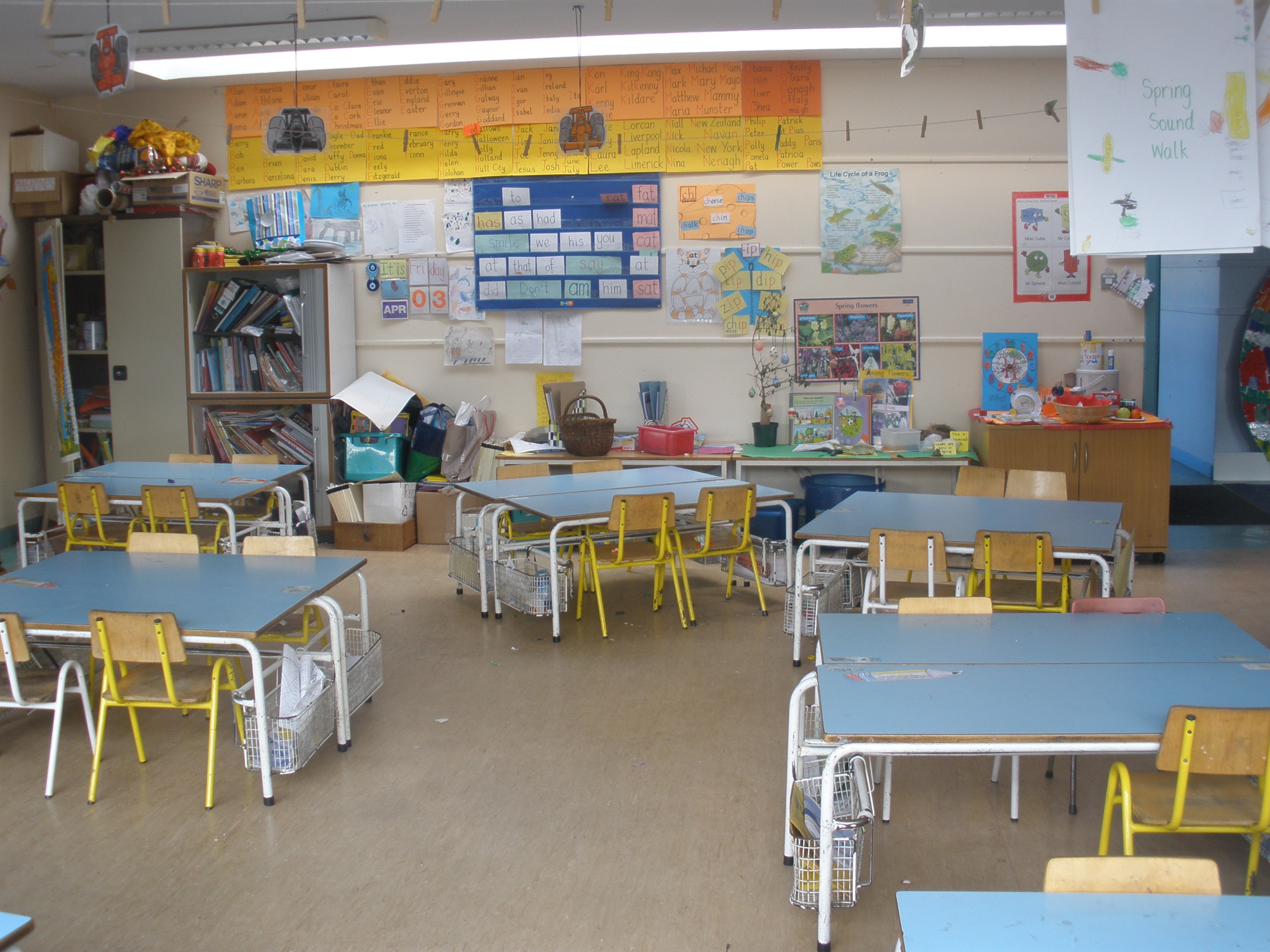
classroom
noun
A room, typically in a school, in which a class of students is taught.
Example: Introduction Second Language Acquisition (SLA) can be defined as the process by which "people learn a language other than their mother tongue, inside or outside of a CLASSROOM" (Ellis, 1997: 3).
fr: salle de classe
correction
noun
The action or process of correcting something.
Example: If there are circumstances where error CORRECTION is legitimate, what are they, and how does the teacher set about it without inhibiting learner development?
fr: correction
didactic
adjective
In the manner of a teacher, particularly so as to treat someone in a patronizing way.
Example: Her great affinity for the people and traditions of rural Chile, combined with her own education in DIDACTIC methods as a teacher, informs a yearning to exalt and connect with a lifestyle rooted in a rudimentary and appreciative interaction with the earth's natural forces.
fr: didactique
discipline
noun
The practice of training people to obey rules or a code of behavior, using punishment to correct disobedience.
Example: In effect we were becoming structurally and visibly unDISCIPLINEd, in a world where DISCIPLINE has its import spelled out on every occasion.
fr: discipline
education
noun
The process of receiving or giving systematic instruction, especially at a school or university.
fr: éducation
evaluation
noun
Evaluation is the task of assigning marks, grades or percentages that represent how well students have learned the skills or concepts taught.
Example: lt is to be distinguished from summative EVALUATION, which I associate with assessment, a periodic measurement rather than a continuous monitoring of process.
fr: évaluation
homework
noun
Schoolwork that a student is required to do at home.
Example: Website will create in pupils the link between the class lessons and the HOMEWORK, using a clear and simple language.
fr: devoir
kindergarten
noun
A school or class that prepares children for first grade. A child in kindergarten is typically 5 or 6 years old.
Example: Whilst this study took place on pre-school children, a similar study by Wagner et al (1994) demonstrated similar findings in a three year longitudinal study on children from KINDERGARTEN through to 2nd grade.
fr: maternelle
learning
verb
The acquisition of knowledge or skills through experience, study, or by being taught.
Example: Behavioural LEARNING theories Assume that human beings develop or modify their behaviour through stimulus-response.
fr: apprendre
memory
noun
The process in which information is encoded, stored, and retrieved.
Example: Only in the figure compositions did he work largely from imagination and MEMORY.
fr: mémoire
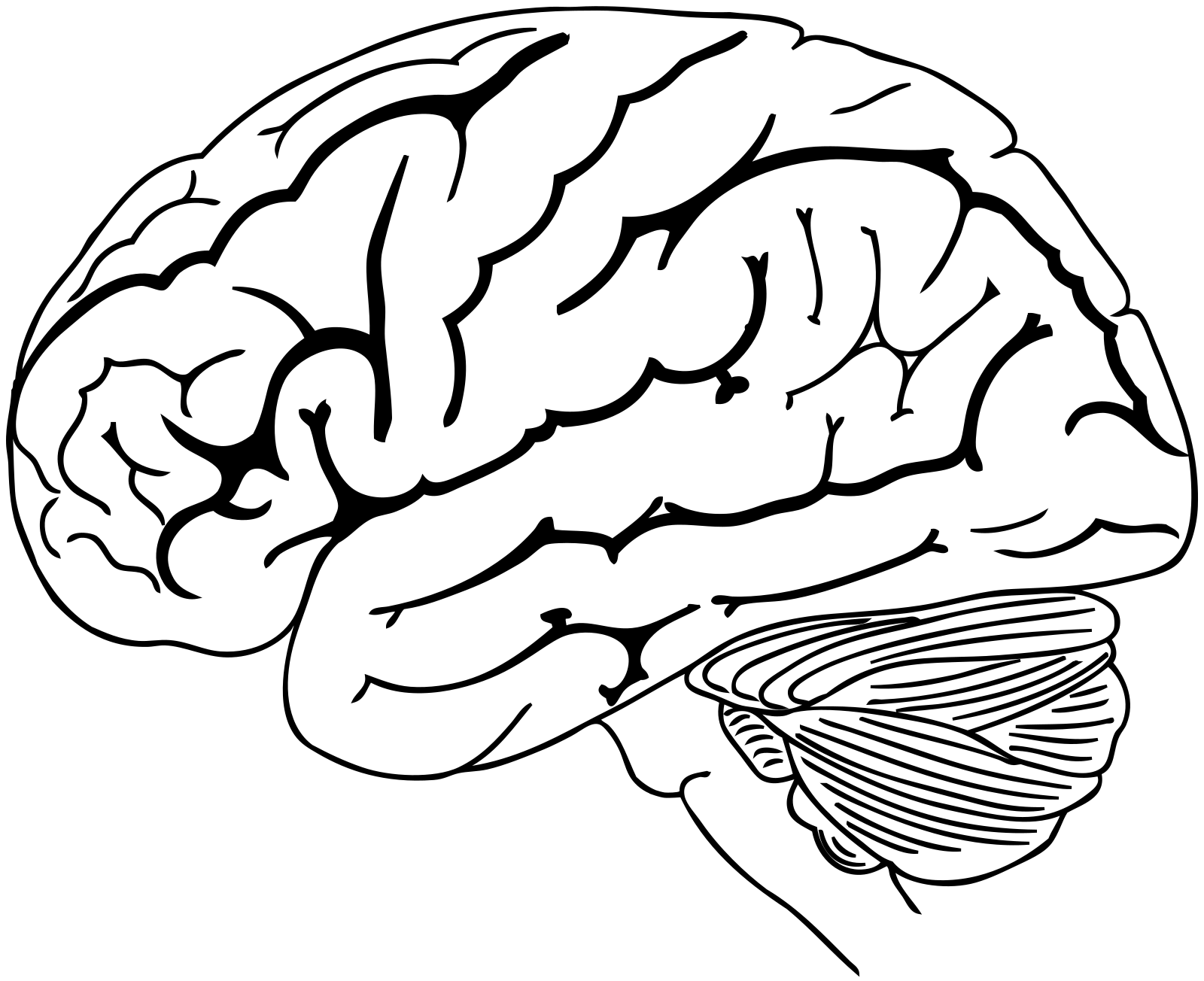
mind
noun
The human consciousness that originates in the brain and is manifested especially in thought,
perception, emotion, will, memory, and imagination.
Example: Information processing is the prime function of "MIND"; its organismic role.
fr: esprit
observation
noun
The action or process of observing something or someone carefully or in order to gain information.
Example: OBSERVATION that the red shift in light received from distant galaxies increases with distance, has led to theories of an expanding universe that originated in a big bang.
fr: observation
planner
noun
A list or chart with information that is an aid to planning.
Example: Ralph Erskine, an architect, was appointed by the Housing Committee as the master PLANNER and consultant for the redevelopment.
fr: planificateur
program
noun
A set of related measures or activities with a particular long-term aim.
Example: The latest major change in this PROGRAM was introduced by the National Defense Education Act of 1958, Title 8, of which amended the George-Barden Act.
fr: programme
recess
noun
A break between school classes.
Example: When Parliament was in RECESS, the Whig leaders continued to keep in close touch, usually by gathering at their country houses, though occasionally holding more formal councils at Newmarket.
fr: récréation
school
noun
An institution for educating children.
Example: One of my first tasks upon arriving at White Design Associates was to develop reflected ceiling services layout and the layouts of toilet facilities on a Kingsmead primary SCHOOL project.
fr: école
student
noun
A person who is studying at a school or college.
Example: Eliot's youthful familiarity with Kipling's stories was clear in his 1 909 STUDENT essay on that author's prose.
fr: élève
subject
noun
A branch of knowledge studied or taught in a school, college, or university.
Example: And so it seems self - evident that the SUBJECT of language should also draw on a cognate disciplinary source even though it happens in this case to have the different name of linguistics.
fr: matière
tutoring
noun
Act as a tutor to (a single student or a very small group).
Example: Constructed as a maternal TUTORING of a child, the poem celebrates a mode of living that, though human and entailing the use of artificial instruments, maintains a close harmony with natural forces.